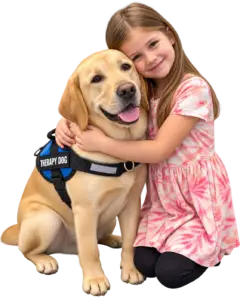
Preparing a therapy dog involves more than teaching basic commands. Dogs working in schools and community organizations need to be comfortable around different people, respond appropriately to unfamiliar situations, and develop the skills needed to interact safely with those they serve.
4 Pawz Strong is a nonprofit organization that works with experienced trainers, breeders, and veterinary professionals to prepare dogs for therapy work. Through training, socialization, and ongoing care, we help dogs develop the skills and confidence needed for their future roles.
Building a Foundation Through Training
Therapy dog training begins with developing reliable behavior and a positive relationship with people. Dogs need to learn how to follow directions, remain calm in different situations, and interact appropriately with the people around them.
Basic obedience, good leash manners, and responsiveness to handlers are important parts of this preparation. As dogs develop these skills, they can begin learning how to remain relaxed and attentive in environments where distractions are common.
4 Pawz Strong works with its training partners to help prepare dogs for the expectations of their future placements.
Preparing Dogs for Different Environments
A school hallway, busy community event, or law enforcement office can present very different experiences for a therapy dog. Each setting has its own sounds, activities, and interactions that dogs need to become familiar with.
Training and socialization can help dogs become more comfortable around people of different ages, unexpected noises, groups of people, and changes in routine. These experiences are particularly important for dogs that may work in active environments.
Preparation also considers the dog’s individual temperament and intended role. The goal is to help each dog become comfortable in the environment where it will work, rather than expecting every dog to respond the same way.
Developing Positive Interactions With People
Therapy dogs often interact with people who have different needs, abilities, and comfort levels around animals. Learning to approach people calmly, respond to their behavior, and respect personal space is an important part of their preparation.
Dogs may also encounter people using mobility aids, children who are excited to meet them, or individuals who prefer a quieter interaction. Training helps prepare dogs to remain attentive to their handlers and respond appropriately in these situations.
These skills help create positive experiences for the people interacting with the dog while supporting the dog’s own comfort and well-being.
Health, Veterinary Care, and Readiness
Preparing a therapy dog also involves caring for its physical health and well-being. Routine veterinary care, appropriate nutrition, exercise, and opportunities for rest are all important parts of helping dogs remain healthy and ready for their work.
4 Pawz Strong coordinates with veterinary professionals and training partners to support dogs throughout their preparation. The specific training and readiness requirements may vary depending on the dog’s intended placement and the organization it will serve.
Before a dog begins its role, it is important to consider both its training progress and its comfort with the responsibilities and environment ahead.
Preparing for Life Beyond Training
Training provides the foundation, but a therapy dog’s development continues as it becomes part of its new organization. Consistent handling, positive interactions, and appropriate daily routines help reinforce the skills the dog has learned.
4 Pawz Strong helps organizations prepare for this transition by coordinating with training partners and providing guidance as dogs move into their new environments.
Learn More About Therapy Dog Preparation
If your organization is planning a new therapy dog program or exploring what preparation involves, 4 Pawz Strong can help you understand the training and care needed before placement.
Contact us to learn more about how we help prepare therapy dogs for schools and community organizations.